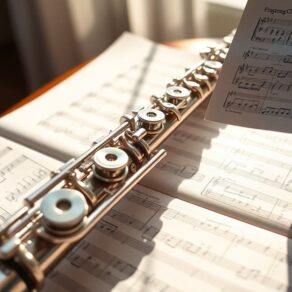
To improve your flute playing, focus on articulation exercises that enhance clarity and expression. Start with simple scales, emphasizing tongue placement with “ta” or “da” sounds. Alternate between long and short notes to boost your breath control. Incorporate a metronome to gradually increase tempo, making practice engaging. As you grow comfortable, experiment with advanced techniques like double and triple tonguing. Embrace these exercises, and you’ll notice a significant improvement in your overall sound and performance. There’s so much more to explore!
Key Takeaways
- Start with simple scales using “ta” or “da” syllables to improve tongue placement and clarity in articulation.
- Alternate between long and short notes to enhance breath control and precision in note separation.
- Set a metronome to gradually increase tempo, adding a challenge to your articulation exercises.
- Practice double tonguing with “ta-ka” syllables for speed and clarity in more complex pieces.
- Record your playing to identify areas for improvement and track your progress over time.
Essential Techniques for Clear Articulation
When you focus on clear articulation, you’ll quickly notice how it enhances your flute playing. One essential technique to master is tongue placement. Position your tongue just behind your upper teeth to create crisp, defined notes. This simple adjustment can significantly improve your sound clarity.
Next, work on breath control. A steady airflow not only supports your tone but also helps maintain consistent articulation. Practice taking deep, controlled breaths before you play, allowing your diaphragm to support your airflow.
Combine these two techniques by starting with simple exercises. Play long notes while focusing on your tongue’s movement and your breath. Gradually increase the complexity of your pieces, always paying attention to how these elements work together.
What Is Articulation in Flute Playing?
Articulation in flute playing refers to how you start and separate notes, shaping the music’s clarity and character. It’s crucial for expressing emotions and creating a distinct sound. Understanding articulation can enhance your performance significantly.
Here are four key aspects to consider:
- Tongue Technique: Your tongue acts as a gatekeeper for each note, determining how sharply or softly you begin them.
- Breath Support: Proper breath control is essential; it provides the power and stability needed for precise articulation.
- Dynamics: Varying your articulation can change the intensity of your playing, making your music more engaging.
- Style: Different musical styles demand specific articulation techniques, so be versatile in your approach.
Fun Warm-Up Exercises for Better Articulation
To improve your articulation on the flute, incorporating fun warm-up exercises can make a significant difference. Start with simple scales, focusing on your tongue placement. Use a light “ta” or “da” sound to initiate each note, ensuring your tongue strikes the roof of your mouth gently. This helps create clarity in your tone and improves your overall sound.
Next, try alternating between long and short notes. This exercise not only enhances breath control but also aids in developing your precision. Make it playful by setting a metronome and challenging yourself to gradually increase the tempo.
Lastly, incorporate clapping or tapping rhythms while you play. This adds an element of rhythm to your warm-up, making it more enjoyable.
Advanced Articulation Patterns for Experienced Players
As you advance in your flute playing, mastering intricate articulation patterns can elevate your performance to new heights.
To enhance your skills, focus on these key techniques:
- Double Tonguing: Practice this technique for rapid passages, using “ta-ka” syllables to create clarity and speed.
- Triple Tonguing: Incorporate “ta-ka-ta” patterns in your exercises to navigate complex rhythms effortlessly.
- Rhythmic Patterns: Experiment with various time signatures and syncopation to develop versatility and confidence.
- Dynamic Contrast: Work on playing both softly and loudly to add expressive depth to your articulation.
How to Practice These Patterns Effectively
While mastering advanced articulation techniques can seem daunting, effectively practicing these patterns can significantly boost your confidence and skill.
Start by developing a consistent practice routine. Set aside time each day to focus solely on articulation, breaking your session into manageable segments. This will help you stay engaged and make progress without feeling overwhelmed.
Incorporate effective repetition into your practice. Choose a few key patterns and repeat them at various tempos, gradually increasing speed as you become more comfortable. This method reinforces muscle memory, allowing your articulations to become more natural over time.
Don’t forget to record yourself! Listening back can provide valuable insights into your progress and areas for improvement.
Bringing Articulation Into Your Music
After building a solid foundation in articulation techniques, it’s time to bring those skills into your music.
Integrating articulation into your playing enhances musical phrasing and expressive dynamics, making your performance more engaging.
Here are four steps to help you incorporate articulation effectively:
- Identify key phrases: Focus on sections of your piece where articulation can enhance the emotional impact.
- Experiment with dynamics: Use different articulations to accentuate expressive dynamics, adding depth to your interpretation.
- Practice slowly: Gradually increase your tempo, ensuring that each note is articulated clearly and deliberately.
- Record yourself: Listening back helps you evaluate how well you’ve integrated articulation, allowing for adjustments as needed.
Frequently Asked Questions
How Can I Improve My Breath Support for Better Articulation?
To improve your breath support for better articulation, focus on strengthening your diaphragm.
Start by practicing deep breathing exercises, where you expand your abdomen rather than your chest. This builds breath control and enhances your airflow.
Incorporate exercises like sustained notes or long tones, paying attention to maintaining a steady stream of air.
With consistent practice, you’ll notice a significant improvement in your articulation, and you’ll feel more confident in your playing.
Keep at it!
What Common Mistakes Should I Avoid While Practicing Articulation?
Avoid letting your tongue wander like a lost traveler; proper tongue placement is crucial.
Don’t underestimate breath control; insufficient support can stifle your articulation.
Skip playing too fast; focus on clarity first.
Neglecting dynamics can make your sound flat, so vary your volume.
Lastly, don’t practice in isolation—find a supportive community to share your journey.
Are There Specific Flute Brands Better for Articulation?
Yes, some flute brands excel in articulation clarity. Brands like Yamaha and Powell are known for their precision and responsiveness, making it easier for you to achieve clear articulation.
When choosing a flute, consider trying different models to find one that suits your playing style. Remember, your connection with the instrument matters, so don’t hesitate to explore options.
Finding the right flute can enhance your performance and boost your confidence in playing.
How Does Tongue Position Affect My Articulation?
Your tongue placement plays a crucial role in achieving articulation clarity.
When you position your tongue correctly, it creates a clean separation between notes, enhancing your overall sound.
Try using the tip of your tongue to lightly touch the roof of your mouth at the front, then release it quickly for crisp attacks.
Practicing this will make a noticeable difference in your playing.
Keep experimenting, and you’ll find the sweet spot that works for you!
Can Articulation Exercises Help With Other Instruments?
Yes, articulation exercises can significantly benefit other instruments!
For clarinet articulation, focusing on tongue placement can improve clarity.
In saxophone techniques, practicing various articulations enhances your expressiveness.
For trumpet phrasing, exercises help with smooth transitions and dynamic control, while brass coordination strengthens your overall performance.
Embrace these exercises; they’ll help you develop as a musician, no matter your instrument.
You’re part of a community that thrives on growth and creativity!
Conclusion
Incorporating effective articulation techniques can significantly enhance your flute playing. Did you know that musicians who regularly practice articulation exercises report a 30% improvement in their clarity and expression? By committing to these exercises and integrating them into your daily routine, you’ll elevate your performance and musicality. Remember, consistency is key, and with dedication, you’ll see remarkable progress. So, keep practicing and enjoy the beautiful sounds you can create with clear articulation!