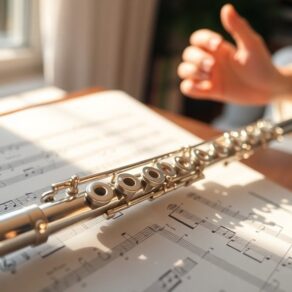
As a flute student, learning beautiful pieces enriches your musical journey and develops your skills. Start with Bach’s Flute Sonatas for timeless structure, then explore Telemann’s “Sonata in A Major” for expressive melodies. Don’t miss Mozart’s Flute Concerto No. 1, and experience the emotional depth of Debussy’s “Syrinx.” Add Doppler’s “Carmen Fantasy” for flair and Clarke’s “The Great Train Race” for modern techniques. Each piece will help you grow as a flutist, with more to discover next!
Key Takeaways
- Bach’s Flute Sonatas provide foundational skills and showcase classical sonata structure, essential for developing technical proficiency.
- Debussy’s “Syrinx” offers deep emotional exploration, enhancing expressiveness and connection with listeners.
- Mozart’s Flute Concerto No. 1 highlights classical elegance, promoting musicality and performance confidence.
- Telemann’s “Sonata in A Major” blends intricate melodies with harmonies, challenging technical and expressive abilities.
- Clarke’s “The Great Train Race” encourages modern techniques and creativity, expanding students’ skills and performance styles.
Why Repertoire Matters for Flute Students
When you choose the right repertoire, you not only enhance your technical skills but also deepen your musical understanding. The diversity of repertoire you explore plays a crucial role in your musical growth.
By selecting pieces from various styles and periods, you challenge yourself to adapt and expand your playing techniques. This variety not only keeps your practice sessions engaging but also builds your confidence as you master different musical languages.
As you delve into diverse works, you’ll discover unique interpretations and emotional expressions, helping you connect with the music on a personal level. This connection fosters a sense of belonging within the musical community, as you share your experiences and insights with fellow students and teachers.
In essence, embracing repertoire diversity is essential for every flute student, paving the way for richer performances and a deeper appreciation of music’s vast landscape.
Exploring Bach’s Flute Sonatas: A Timeless Choice
While many composers have contributed to the flute repertoire, Bach’s Flute Sonatas stand out as timeless pieces that every student should explore. These works not only showcase Bach’s influence on classical music but also provide a solid foundation in sonata structure.
By studying these sonatas, you’ll gain insight into intricate melodic lines and harmonies that define the Baroque style. As you dive into Bach’s compositions, you’ll appreciate how he balances technical demands with expressive depth.
Each sonata presents unique challenges, helping you develop your skills and musicality. You’ll find joy in the interplay between the flute and continuo, as you learn to communicate the emotional nuances inherent in Bach’s writing.
Embracing these sonatas not only enhances your repertoire but also connects you to a rich historical tradition, fostering a sense of belonging within the broader musical community.
Telemann’s “Sonata in A Major”: A Baroque Gem
Building on the foundation laid by Bach, Telemann’s “Sonata in A Major” offers another remarkable addition to the Baroque flute repertoire.
This sonata showcases Telemann’s influence, blending intricate melodies with expressive harmonies that invite you into the Baroque world. As you explore its three movements, you’ll encounter various Baroque techniques, such as ornamentation and contrasting dynamics, which enrich your playing experience.
The first movement’s lively tempo sets an engaging tone, while the second movement provides a lyrical contrast, allowing you to express deeper emotions.
The final movement bursts with energy, challenging you to showcase your technical skill.
Mozart’s Elegant Flute Concerto No. 1: A Must-Play
Mozart’s Flute Concerto No. 1 in G Major is an essential piece for any flute student, showcasing the elegance and brilliance of the Classical era.
As you delve into this masterpiece, you’ll experience Mozart’s influence on flute techniques that elevate your playing.
The concerto’s lively first movement invites you to explore dynamic phrasing and crisp articulation, while the lyrical second movement allows you to develop your expressive capabilities.
Debussy’s “Syrinx”: The Essence of Expression
Expression lies at the heart of Debussy’s “Syrinx,” a seminal work that every flute student should master. This piece invites you to explore deep emotional landscapes through your musical interpretation. As you play, focus on the nuances and subtle shifts in dynamics that convey the essence of longing and intimacy.
“Syrinx” challenges you to forge an emotional connection with your audience, allowing them to feel the very soul of the music. Each note is an opportunity to express vulnerability and strength, making your performance a personal journey.
To truly embody this work, pay attention to phrasing and breath control; they’re essential for conveying the piece’s ethereal quality.
As you become more comfortable with the technical aspects, let your heart guide you. In doing so, you’ll not only enhance your skills but also create a beautiful bond with listeners, reminding them of the power of music to express the inexpressible.
Discover the Playful Charm of Sancan’s ‘Sonatine’
After exploring the profound emotional depths of Debussy’s “Syrinx,” you might find yourself eager for a change of pace. Enter Sancan’s “Sonatine,” a delightful piece that showcases his unique style infused with playful melodies. This work is perfect for students looking to balance technical skill with joyful expression.
As you dive into “Sonatine,” you’ll notice its lighthearted nature encourages you to explore different dynamics and articulations. The first movement invites you to dance with its lively rhythms, while the second movement offers a contrasting moment of reflection, showcasing the versatility of your instrument.
Practicing this piece not only hones your flute techniques but also allows you to connect with an enchanting world of sound. You’ll find that Sancan’s charm lies in his ability to create music that feels both sophisticated and accessible, making “Sonatine” a must-learn for every aspiring flutist.
Embrace the playful spirit and let your flute sing!
Carmen Fantasy” by Franz Doppler: A Showstopper
If you’re looking to make a memorable impression, Franz Doppler’s “Carmen Fantasy” is an exceptional choice that showcases your technical prowess and expressive capabilities.
This piece brilliantly captures the essence of Bizet’s opera, and with Doppler’s brilliance, you’ll find yourself immersed in a world of vibrant melodies.
Here are three captivating elements of “Carmen Fantasy”:
- Dynamic Range: Experience the thrilling contrasts between soft, lyrical passages and bold, dramatic sections that keep your audience engaged.
- Technical Challenges: Mastering Doppler’s fantasy techniques, such as rapid runs and intricate rhythms, will enhance your skill set and confidence.
- Expressive Phrasing: Dive into the emotional depth of the piece, allowing your interpretations to resonate with listeners.
Experience Modern Flute Techniques With Clarke’s ‘The Great Train Race’
Clarke’s “The Great Train Race” offers an exhilarating exploration of modern flute techniques that will captivate both players and audiences alike. As you dive into this piece, you’ll encounter a variety of techniques that push the boundaries of traditional flute playing. From rapid runs to dynamic accents, each section encourages you to experiment and express your individuality.
This piece isn’t just about technical proficiency; it’s a chance to engage in performance practice that reflects your unique style. You’ll find yourself challenged to incorporate flutter-tonguing, harmonics, and other modern techniques, making each performance a thrilling experience for everyone involved.
As you master “The Great Train Race,” you’ll discover a sense of belonging in the innovative world of contemporary flute music. Embrace these techniques, and let your passion for the flute shine through, connecting you with fellow musicians and listeners who share your love for modern artistry.
Mastering Technique With Tchaikovsky’s “Nocturne
Exploring modern techniques is exciting, but mastering the fundamentals of classical repertoire is equally important for any aspiring flutist. Tchaikovsky’s “Nocturne” offers a rich landscape for you to refine your technique while embracing emotional depth.
Here are three key aspects to focus on:
- Tchaikovsky’s Dynamics: Pay attention to the contrasts between soft passages and powerful crescendos. This will help you develop control and expressiveness.
- Phrasing and Breath Control: Emphasize the lyrical lines by shaping phrases with your breath. This not only enhances your interpretation but also improves your stamina.
- Articulation and Smoothness: Work on achieving a seamless legato. The beauty of “Nocturne” lies in its flowing lines, so practice connecting notes with clarity and precision.
Mastering these elements will deepen your Nocturne interpretation and elevate your overall performance as a flutist. Embrace the journey!
How Each Piece Helps You Grow as a Flutist
Every piece you learn on the flute contributes uniquely to your development as a musician. As you tackle different compositions, you enhance your technical skills, mastering fingerings, breath control, and dynamics.
For instance, fast-paced pieces challenge your agility, while lyrical ones deepen your phrasing and articulation.
Moreover, each piece invites you to explore musical expression. You’ll discover how to convey emotions through your playing, connecting with your audience on a deeper level.
This journey fosters not just proficiency, but also a sense of belonging within the musical community.
Frequently Asked Questions
What Are the Essential Skills Developed Through Learning These Pieces?
Learning beautiful flute pieces develops essential skills like musical expression and technical proficiency.
You’ll enhance your ability to convey emotions through music, making each performance unique. As you tackle various challenges in these pieces, you’ll improve your finger technique, breath control, and articulation.
This journey not only builds your confidence but also fosters a sense of belonging within the musical community, as you connect with fellow musicians who share your passion for the flute.
How Do I Choose the Right Piece for My Skill Level?
To choose the right piece for your skill level, start with a skill assessment.
Evaluate your technical abilities, musicality, and comfort with different styles.
Next, consider piece selection: opt for something that challenges you but isn’t overwhelming.
Look for pieces that excite you and align with your interests.
Finally, don’t hesitate to ask your teacher for recommendations—they can guide you towards options that will help you grow while enjoying the journey.
Can These Pieces Be Played on Different Flute Types?
Yes, many pieces can be played on different flute types, like the concert flute, piccolo, or alto flute.
Each flute type offers unique sound qualities, enhancing your performance versatility. When selecting a piece, consider how it translates across these instruments.
You’ll find that repertoire can often adapt well, allowing you to explore different timbres and techniques. Embrace this variety, and enjoy the journey of expressing yourself through your chosen flute type!
What Is the Historical Context of These Compositions?
The historical context of these compositions is rich and varied.
You’ll find Baroque influences that emphasize ornamentation and intricate melodies, showcasing the flute’s capabilities.
As you explore further, the Romantic expressions emerge, highlighting emotional depth and individualism.
These pieces not only reflect their eras but also connect you to a broader musical tradition, inviting you to experience the evolution of flute music through time, making your journey as a flutist even more meaningful.
How Can I Effectively Practice These Pieces for Performance?
To conquer performance anxiety and shine like a polished gem, use effective practice techniques.
Start by breaking pieces into manageable sections, mastering each before weaving them together. Incorporate slow practice to build muscle memory, and visualize your success—imagine the audience captivated by your sound.
Record yourself to hear your progress, and perform for friends to simulate the stage. Consistent, focused rehearsals will transform your nerves into excitement, allowing your talent to truly resonate.
Conclusion
Incorporating these ten beautiful flute pieces into your practice can transform your musical journey. Did you know that over 90% of professional flutists credit their success to mastering such repertoire? Each selection not only hones your technique but also deepens your understanding of music. As you explore these masterpieces, you’ll discover new dimensions of expression and artistry, setting you on a path to becoming a more versatile and skilled flutist. Embrace the challenge and let your passion soar!