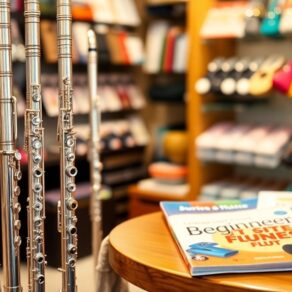
When buying your first flute, consider the type that suits your music style, like a concert or wooden flute. Look for key features such as durable materials, a comfortable weight, and easy playability. Decide if a new or used flute fits your budget. Quality brands like Yamaha and Gemeinhardt are great for beginners. Don’t forget essential accessories, and remember to maintain your flute for longevity. Keep exploring to discover more tips for your musical journey!
Key Takeaways
- Choose between a concert flute for versatility or a wooden flute for a warmer tone, based on your musical preferences.
- Opt for durable materials like nickel silver or silver-plated for a reliable beginner flute.
- Consider key mechanisms like closed hole or plateau design to ease playability for new players.
- Set a budget that includes essential accessories like a case, cleaning supplies, and a music stand.
- Research reputable beginner flute brands like Yamaha, Gemeinhardt, and Pearl for quality and performance.
Understanding Different Types of Flutes
When diving into the world of flutes, you’ll quickly discover that there are several types, each designed for different playing styles and musical genres.
The most common type is the concert flute, typically made of silver or nickel and known for its bright, clear sound. This flute is versatile, perfect for classical, jazz, and contemporary music, making it a popular choice for beginners.
On the other hand, wooden flutes offer a warmer, richer tone, often favored in folk and world music. They’re usually crafted from various woods, which can add unique characteristics to the sound.
While wooden flutes may require more maintenance and can be pricier, they provide a distinct musical experience that many players cherish.
Choosing the right flute is essential, as it helps you connect with your music and feel a sense of belonging in the flute community.
Explore your options and find the perfect fit for you!
What Key Features Should You Consider in a Beginner Flute?
As you embark on your flute journey, considering key features can significantly impact your learning experience. Here are four crucial aspects to keep in mind:
- Flute Material: Look for flutes made of nickel silver or silver-plated materials. These are durable and provide a good sound quality for beginners.
- Key Mechanism: Choose a flute with a closed hole or plateau key mechanism. This design is easier for beginners to play, allowing for more comfortable finger positioning.
- Weight: Ensure the flute is lightweight. A lighter instrument is easier to handle and can make practice sessions longer and more enjoyable.
- Adjustable Footjoint: This feature allows for better customization to fit your hand size, enhancing comfort as you learn.
Selecting the right flute with these features will help you build a strong foundation and foster your love for music.
Happy playing!
Should You Buy a New or Used Flute?
Wondering whether to invest in a new or used flute? Both options have their merits, and your choice will depend on your needs and budget.
A new flute comes with advantages like a warranty, pristine condition, and the latest technology, which can enhance your playing experience. If you’re looking for reliability and assurance, a new instrument might be the way to go.
On the other hand, used flutes can offer great value. Considerations include the flute’s condition, any repairs it might need, and whether it suits your playing style. You can often find quality brands at a fraction of the price, making it an attractive option for beginners.
Ultimately, whether you choose new or used, ensure you feel a connection to your flute. This instrument will be your companion on your musical journey, so pick one that resonates with you!
How to Set Your Budget for Your First Flute?
After deciding whether a new or used flute suits your needs, it’s time to set a budget for your first instrument.
Start by considering various budget considerations to ensure you invest wisely. Here are four key points to help you define your budget:
- Quality vs. Cost: Determine how much you’re willing to spend for quality; a reliable flute can enhance your learning experience.
- Essential Accessories: Don’t forget to allocate funds for necessary accessories like a flute case, cleaning supplies, and a music stand.
- Future Needs: Think ahead—will you want to upgrade as you progress? Setting aside a small fund for future improvements can be beneficial.
- Local Market: Research local prices for both new and used flutes to gauge what’s reasonable in your area.
What Are the Best Flute Brands for Beginners?
When choosing your first flute, which brands stand out for beginners? Several reputable brands have earned their place among aspiring flutists.
Yamaha flutes are known for their quality craftsmanship and ease of play, making them a fantastic choice for newcomers. Gemeinhardt flutes are also popular, offering a warm tone and solid durability, perfect for those starting their musical journey.
Pearl flutes provide a rich sound and responsive key action, ensuring an enjoyable learning experience. Jupiter flutes are well-regarded for their affordability and reliable performance, catering to budget-conscious beginners.
Trevor James flutes combine excellent sound quality with comfortable playability, attracting many first-time players. Lastly, Buffet flutes deliver a professional feel at entry-level prices, making them a great option as you progress.
Each brand has something unique to offer, so explore them to find the perfect fit for your musical aspirations!
What Must-Have Accessories Should You Get?
Alongside choosing the right flute brand, equipping yourself with the right accessories can significantly enhance your playing experience.
These essential items not only improve your comfort but also ensure your flute stays in top shape. Here are four must-have accessories you’ll want to consider:
- Carrying Case: A sturdy case protects your flute from damage and makes transportation easier. Look for one with extra compartments for accessories.
- Cleaning Supplies: Regular maintenance is key. A cleaning rod, cloth, and swab will keep your flute in pristine condition.
- Flute Stand: When you’re not playing, a stand keeps your flute safe and readily accessible.
- Metronome: This invaluable tool helps you develop your timing and rhythm, essential for any musician.
Investing in these accessories not only enhances your playing but also fosters a sense of community among fellow flutists.
How Can You Maintain Your Beginner Flute?
To keep your beginner flute in optimal condition, regular maintenance is essential. Start by practicing effective cleaning techniques after each use. Use a soft cloth to wipe down the exterior, and always swab the inside with a cleaning rod to remove moisture, which can lead to damage over time.
It’s also important to check for common repairs. Look for any sticky pads or misaligned keys, as these can affect your playing. If you notice any issues, don’t hesitate to consult a professional. Regular servicing can prevent larger problems down the line.
Finally, store your flute in a hard case when not in use to protect it from dust and physical damage.
Frequently Asked Questions
What Are the Common Mistakes Beginners Make When Buying a Flute?
When buying a flute, you often overlook flute brand comparisons and material options.
Many beginners rush into a purchase without researching different brands’ reputations. You might also choose a flute made from less durable materials, thinking it’s fine for a starter.
It’s crucial to try out various options and ask for recommendations. This way, you’ll find a flute that suits your needs, helping you feel more confident and connected in your musical journey.
How Long Does It Typically Take to Learn the Flute?
Learning the flute is like planting a tree; it takes time to bear fruit.
Typically, you’ll need about six months to a year to play simple tunes proficiently, but it depends on your practice routines and dedication. Regular practice, combined with some basic music theory, can accelerate your progress.
Don’t rush the journey; enjoy each note and celebrate your milestones. You’re part of a community that grows together through music!
Can I Rent a Flute Instead of Buying One?
Yes, you can definitely rent a flute instead of buying one!
Flute rental options are a great way to start without a big commitment. Renting offers benefits like lower upfront costs and the chance to try different models before deciding.
It also allows you to focus on learning and enjoying music without the pressure of ownership. Plus, if you decide to continue, you can easily transition to a purchase when you’re ready!
What Should I Look for in a Flute Teacher?
When you’re looking for a flute teacher, focus on their teaching style and lesson frequency.
You’ll want someone who creates a comfortable atmosphere while challenging you to grow. Check if they offer lessons that fit your schedule, whether weekly or bi-weekly, to ensure consistent progress.
Also, consider their experience and how well they communicate concepts. A good rapport will make your learning journey enjoyable and help you feel connected to the music.
How Do I Choose the Right Flute Size for My Child?
To choose the right flute size for your child, consider their age and hand span.
For younger children, a straight flute is often best, while older kids might manage a curved or standard flute.
Ensure they can comfortably reach all the keys without straining.
It’s also helpful to try different flute types at a music store, allowing your child to feel and play each one to see which suits them best.
Conclusion
When you’re ready to start your flute journey, remember that choosing the right instrument can make all the difference. With the right features, budget, and a bit of research on brands, you’ll be well on your way to making beautiful music. Don’t forget those essential accessories and maintenance tips to keep your flute in top shape. By taking these steps, you’ll hit the ground running and be playing like a pro in no time!