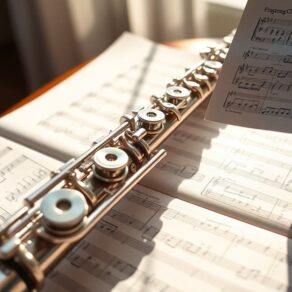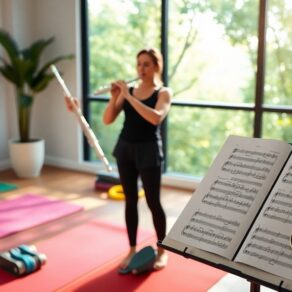
Daily warm-up exercises are vital for flutists like you to enhance your skills and boost your confidence. Start with long tones to improve your breath control, followed by scales and arpeggios to build finger dexterity. Incorporate varied rhythms and articulation techniques to enhance expression. Remember, consistent practice builds a solid foundation for your overall musicianship. Stay committed, and you’ll discover exciting warm-up exercises to invigorate your routine and elevate your playing!
Key Takeaways
- Start with long tones to enhance breath control and tone quality, focusing on steady airflow and sound consistency.
- Incorporate scales and arpeggios in various octaves to strengthen finger dexterity and develop aural skills.
- Use a metronome to practice rhythms, alternating between staccato and legato for better articulation and expression.
- Include deep breathing exercises to improve diaphragmatic support and sustain longer phrases while playing.
- Engage in improvisation or free play to foster creativity and a sense of community among fellow flutists.
The Importance of Daily Warm-Ups for Flutists
When you incorporate daily warm-ups into your routine, you’re setting yourself up for success as a flutist. These exercises are crucial for developing both mental focus and physical readiness, which are essential for any musician.
By dedicating time each day to warm up, you not only prepare your body but also sharpen your mind, helping you stay present during practice and performances.
Warm-ups enhance your finger dexterity, breath control, and tone quality, creating a solid foundation for your playing.
As you build these habits, you’ll notice improvements in your overall musicianship, boosting your confidence and sense of belonging within the music community.
Essential Techniques for Effective Warm-Up Exercises
To maximize the benefits of your warm-up routine, it’s essential to focus on specific techniques that enhance your playing. Start by incorporating technique variations into your warm-up sequences. This keeps things fresh and challenges your skills. For instance, alternate between long tones, scales, and arpeggios, adjusting the tempo to find your comfort zone.
Next, pay attention to your posture and hand positioning; these factors greatly impact your sound and technique. Don’t shy away from starting slowly—this helps you develop muscle memory and precision.
Finally, always include a short improvisation or free play section to foster creativity and ease tension. Remember, warm-ups aren’t just a chore; they’re an opportunity to connect with your instrument and express yourself.
Embrace these techniques, and you’ll not only improve your playing but also feel a greater sense of belonging within the flutist community.
Master Your Breathing for Better Flute Playing
While mastering your breathing may seem daunting, it’s a crucial skill that directly impacts your flute playing. Developing strong breath control and diaphragmatic support will enhance your tone, intonation, and overall performance.
Start by practicing deep breathing exercises. Inhale deeply through your nose, allowing your diaphragm to expand, then exhale slowly through your mouth. This technique helps you gain better control over your airflow.
Try incorporating this breathing method into your warm-ups. As you play, focus on maintaining steady airflow and using your diaphragm to support each note. You’ll notice a significant difference in your sound and stamina.
Remember, it’s all about gradual progress; don’t rush the process.
Connecting with other flutists who share similar goals can also encourage you along the way. Embrace this journey, and soon, you’ll find that mastering your breath not only improves your playing but also deepens your enjoyment of music.
Scales and Arpeggios: Building a Strong Foundation
Scales and arpeggios form the backbone of your flute technique, providing essential building blocks for musicality and expression. By incorporating scale patterns into your daily practice, you strengthen your fingers and develop your ear.
Start with major and minor scales, gradually increasing your range and speed. Don’t rush; focus on accuracy and clarity.
Next, integrate arpeggio exercises. These exercises help you understand chord structures while enhancing your technical skills.
Try playing arpeggios in different octaves and dynamics, which adds depth to your playing.
Warm-Up Exercises for Tone Development
As you embark on your journey to enhance your flute tone, incorporating effective warm-up exercises is essential.
Start with long tones, holding each note for as long as you can while focusing on tone production. Choose a comfortable pitch and gradually move through your range. This practice helps develop your sound quality, allowing you to hear and adjust your intonation.
Next, try lip slurs. By alternating between notes without changing your fingerings, you improve your flexibility and control, which are crucial for producing a rich tone.
You can also incorporate dynamic variations, playing softly and loudly, to explore your sound’s expressive potential.
Finally, consider using a tuner to monitor your pitch as you practice these exercises.
Remember, consistency is key. The more you integrate these warm-up exercises, the more you’ll notice improvements in your tone production and overall sound quality.
Embrace the process and enjoy your growth as a flutist!
Finger Flexibility and Coordination Drills for Flutists
Mastering finger flexibility and coordination is crucial for flutists striving for technical proficiency. To enhance your skills, start with simple finger stretches. Extend your fingers wide and hold for a few seconds, then curl them into a fist. Repeat this process several times to increase mobility.
Next, practice hand independence by playing scales while focusing on each finger’s movement. Use a metronome to keep a steady tempo, gradually increasing the speed as you gain confidence.
Incorporate finger coordination drills like the “finger twister” exercise, where you alternate fingers on different keys. This helps build agility and strengthens your muscle memory.
Incorporate Rhythm and Articulation in Your Warm-Ups
To further enhance your warm-up routine, incorporating rhythm and articulation can significantly boost your overall performance. By focusing on these elements, you’ll develop not just technical skills but also musicality.
Here are some ways to integrate rhythmic patterns and articulation exercises into your daily practice:
- Use a metronome: Establish a steady tempo to help internalize rhythmic patterns.
- Practice scales with varied rhythms: Experiment with dotted notes, triplets, or syncopation.
- Incorporate staccato and legato: Alternate between short, detached notes and smooth, connected playing to improve articulation.
- Add dynamics: Use crescendos and decrescendos in your rhythmic patterns to enhance expression.
These exercises create a sense of belonging within the music community, as you share the same journey of growth with fellow flutists.
Embrace rhythm and articulation, and watch your confidence and performance flourish!
Innovative Warm-Up Exercises to Refresh Your Routine
How can you keep your warm-up routine fresh and engaging? Start by incorporating creative warm-ups that spark joy and excitement. Think outside the box! Try adding some fun exercises like playing along with your favorite songs. This not only warms up your fingers but also gets you in the right mindset for practice.
Another great idea is to mix different techniques. Combine scales with improvisation or experiment with unusual rhythms. You could even challenge yourself by setting a timer and playing each exercise for just one minute. This keeps things dynamic and helps you focus.
Lastly, don’t hesitate to share your innovative exercises with fellow flutists. You’ll build connections and inspire each other to explore new ideas.
How to Keep Your Daily Practice Consistent?
Keeping your daily practice consistent is key to making progress as a flutist. Here are some effective strategies to help you stay on track:
- Set specific practice goals: Define what you want to achieve each week, whether it’s mastering a piece or improving a technique.
- Create a routine: Designate a specific time each day for practice, making it a non-negotiable part of your schedule.
- Use motivation techniques: Reward yourself for meeting your practice goals to keep the excitement alive.
- Join a community: Connect with other flutists, whether online or in-person, to share experiences and encourage each other.
Frequently Asked Questions
How Long Should My Warm-Up Session Typically Last?
Your warm-up session should typically last about 15 to 30 minutes for optimal duration.
This gives you enough time to engage in various warm-up routines that prepare your body and mind for practice or performance.
Consistency is key, so aim for a routine that fits comfortably into your schedule.
Can Warm-Ups Be Skipped if I’m Short on Time?
You shouldn’t skip warm-ups, even when time’s a thief.
Think of them as essential exercises that lay the foundation for your performance, like a ship setting sail. Instead of cutting corners, consider time management; even a brief session can work wonders.
Prioritize those key drills, and you’ll feel more connected to your instrument. Remember, every minute spent warming up strengthens your bond with music, making you part of a supportive community of passionate musicians.
What Should I Do if I Feel Pain While Warming Up?
If you feel pain while warming up, stop immediately to avoid further injury.
Focus on pain management by assessing the intensity and location of the discomfort. Consider modifying your routine or taking breaks to prevent injuries.
It’s essential to listen to your body; pushing through pain can lead to chronic issues. Connect with fellow musicians for support and tips on injury prevention.
Are There Specific Warm-Ups for Different Musical Genres?
Yes, there are genre-specific techniques you can incorporate into your warm-up routines! For classical, focus on scales and arpeggios to develop precision.
If you’re into jazz, try improvising over chord progressions to enhance your creativity.
Rock and pop often require rhythm exercises, so work on syncopation.
Tailoring your warm-ups to your preferred genre not only prepares your body but also connects you more deeply with the music you love.
Keep exploring!
How Can I Track My Progress With Warm-Up Exercises?
To track your progress with warm-up exercises, maintain a progress journal alongside your goal setting.
This juxtaposition of reflection and ambition creates a powerful tool for personal growth. Write down your daily achievements, noting improvements in technique or endurance.
Regularly review your entries to see how far you’ve come, and adjust your goals as needed. This practice not only keeps you motivated but also fosters a sense of belonging in your musical journey.
Conclusion
Incorporating daily warm-up exercises into your routine isn’t just a chore; it’s a key to unlocking your full potential as a flutist. Just like a knight sharpens their sword before battle, these techniques will prepare you for every musical challenge ahead. Stay consistent, and don’t hesitate to refresh your routine with innovative exercises. Remember, each practice session is a step toward mastery, so embrace the journey and let your passion shine through every note you play!