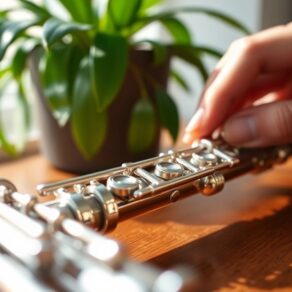
To master your flute technique, focus on essential skills like breath control and finger agility. Practicing deep diaphragmatic breathing will enhance your airflow. Incorporate articulation patterns for expressive playing, and work on your dynamics to add emotional depth. Don’t forget to develop vibrato, as it adds warmth to your sound. Avoid common mistakes like poor posture and tension in your hands. By honing these skills, you’ll create a unique sound and elevate your playing to new heights. You’ll discover more techniques to enhance your performance.
Key Takeaways
- Develop breath control and deep diaphragmatic breathing for improved airflow and sustained notes in flute playing.
- Master articulation techniques, including staccato and legato, to enhance musical expression and clarity.
- Practice dynamic range and intonation exercises with a tuner to achieve pitch accuracy and emotional depth.
- Regularly incorporate vibrato exercises into your routine to refine control, depth, and consistency in sound.
- Avoid common mistakes like poor posture and tension in hands to maintain agility and strong breath support while playing.
Essential Skills for Flute Mastery: Breath Control and Finger Placement
To master the flute, you’ll need to develop two essential skills: breath control and finger placement. Breath support is crucial; it allows you to sustain notes and create a fuller sound. Start by practicing deep diaphragmatic breathing. Inhale deeply through your nose, letting your abdomen expand. Exhale steadily, maintaining a controlled airflow as you play. This will enhance your ability to support your sound.
Next, focus on finger agility. Your fingers should move fluidly between notes, ensuring smooth transitions. Begin with simple scales, practicing each note slowly, paying attention to finger placement. Use a metronome to gradually increase your speed, which will help you build confidence and dexterity.
Incorporating these skills into your practice routine won’t only improve your playing but also foster a sense of belonging in the flute community as you progress together with fellow musicians.
Articulation and Vibrato: Techniques for Expressive Playing
Articulation and vibrato play pivotal roles in bringing your flute performance to life. Mastering articulation patterns enhances your musical expression, allowing you to convey emotions effectively.
Start by practicing staccato and legato techniques. Staccato gives your notes a crisp, detached sound, while legato connects them smoothly. Experiment with accents to add emphasis; these nuances will greatly enrich your playing.
Vibrato styles add another layer of expressiveness. A controlled vibrato can create warmth and depth in your sound. To develop this skill, focus on your diaphragm and maintain consistent airflow.
Try varying the speed and width of your vibrato to match different musical phrases. Together, these techniques allow you to shape your performance authentically.
Embrace the journey of mastering articulation and vibrato; they’re essential tools that will help you connect with your audience and elevate your flute playing to new heights.
Mastering Dynamics and Intonation for Expressive Flute Playing
Building on your mastery of articulation and vibrato, understanding dynamics and intonation is vital for expressive flute playing.
To enhance your musical expression, focus on expanding your dynamic range. Practice playing passages softly and loudly, paying attention to how these changes affect the overall emotion of the piece.
Incorporating intonation exercises into your routine is equally important. Use a tuner to identify and adjust your pitch, ensuring you’re in tune across different registers.
Try playing long tones, gradually varying your dynamics while maintaining pitch accuracy.
Combining these techniques won’t only improve your technical skills but also deepen your emotional connection to the music.
Remember, every note you play can tell a story, and mastering dynamics and intonation will help you convey that story more powerfully.
Embrace these practices, and you’ll belong to a community of expressive flute players who truly understand their art.
Effective Vibrato Exercises for Flute Players
While mastering vibrato can seem challenging, incorporating effective exercises into your practice routine can greatly enhance your technique.
Start by practicing the “winging” method: gently oscillate your diaphragm while producing a steady note. This helps you connect your breath support with your vibrato.
Next, try the “pulse” exercise—play a sustained note and gradually increase the speed of your vibrato, then slow it down. This will help you control the tempo of your vibrato.
Another useful exercise is to mimic a siren. Glide between notes while adjusting your vibrato’s depth and speed.
Finally, recording yourself can provide valuable feedback. Listen for consistency and expressiveness in your vibrato techniques.
Incorporating these vibrato exercises into your daily practice not only builds your skill but also fosters a sense of community among fellow flute players striving for the same goal.
How to Practice Scales for Technical Growth
As you refine your vibrato techniques, it’s equally important to focus on scales to develop your technical skills. Start by practicing basic scale patterns, ensuring you play each note clearly and in tune. Gradually increase your speed as you become more comfortable, but don’t sacrifice accuracy for tempo.
Incorporate rhythmic variations to challenge yourself further. Try playing scales in different rhythms—such as triplets or dotted notes—this will help improve your flexibility and control. Consider using a metronome to maintain a steady tempo while experimenting with these variations.
Additionally, practice scales in various octaves and keys to broaden your familiarity with the instrument. This not only enhances your technical growth but also builds your confidence in performance settings.
Avoid These Common Flute Mistakes
Many flutists, especially beginners, make common mistakes that can hinder their progress. By identifying these errors, you can improve your technique and play with confidence.
Here are four common pitfalls to watch out for:
- Poor Posture: Slouching or improper alignment can restrict your airflow and limit your sound quality.
- Tension in the Hands: Grip your flute too tightly, and you’ll create tension that affects your control and agility.
- Neglecting Breath Support: Failing to utilize proper breath support can lead to weak notes and inconsistent dynamics.
- Inconsistent Finger Placement: If your fingers aren’t positioned correctly, you’ll struggle with accuracy and speed.
Creating Your Unique Flute Sound
Creating your unique flute sound is essential for expressing your musical identity. To achieve this, focus on developing your tone color. Experiment with different embouchures, air support, and finger placements to discover what resonates with you. Listen closely to how each adjustment alters your sound; it’s all about finding the balance that reflects your personal style.
Don’t be afraid to draw inspiration from various genres and artists. Try incorporating elements from jazz, classical, or folk music into your practice. This exploration can enrich your tonal palette and help you identify what truly speaks to you.
Record yourself regularly and listen critically. This helps you recognize your strengths and areas for improvement. Embrace the journey of self-discovery and remember that your unique sound is a reflection of who you’re as a musician.
Trust yourself, and let your individuality shine through every note you play.
Tips for Combining Techniques Creatively in Your Playing
While exploring the vast landscape of flute techniques, you can enhance your playing by creatively combining various elements.
Embracing technique fusion not only broadens your skill set but also adds depth and individuality to your sound. Here are some tips for making creative combinations in your playing:
- Mix articulations: Blend staccato with legato phrases to create intriguing contrasts.
- Vary dynamics: Experiment with sudden changes in volume to emphasize specific notes or sections.
- Incorporate extended techniques: Try flutter-tonguing or harmonics alongside traditional fingerings for unique textures.
- Combine styles: Fuse classical and jazz elements to form a distinctive personal style.
Frequently Asked Questions
How Often Should I Clean My Flute?
You should clean your flute after every use to maintain its condition.
Regular cleaning frequency helps prevent buildup and keeps the pads dry. Use a soft cloth to wipe down the exterior and a cleaning rod with a cloth to reach inside.
Additionally, consider deep cleaning it every few months and consult a professional for maintenance tips.
This way, you’ll ensure your instrument stays in top shape and sounds its best!
What Type of Flute Should I Start With?
When you’re starting out, consider beginner flutes from reputable brands like Yamaha or Pearl.
These flutes offer a perfect blend of quality and affordability, making your musical journey smoother. You’ll find that some flutes have a warm, inviting sound, while others might feel more rigid and challenging.
Choosing the right flute can enhance your experience, helping you connect with others who share your passion for music.
Enjoy the process of finding your perfect fit!
How Can I Choose the Right Embouchure?
To choose the right embouchure, start by experimenting with different embouchure types, like the flat and curved shapes.
Adjusting your embouchure is essential; try altering the angle and position of your lips while playing. Focus on producing a clear sound and maintaining comfort.
Record yourself to hear the differences, and don’t hesitate to seek feedback from others.
What Is the Best Way to Hold a Flute?
The best way to hold a flute involves a proper flute grip and hand position.
Start by placing your left hand on the top keys, with your fingers curved and relaxed, while your right hand supports the flute’s weight. Your right thumb should rest under the flute, providing balance.
Keep your wrists straight and avoid tension. This grip allows for better control and comfort, helping you play with ease and confidence.
Should I Use a Metronome When Practicing?
Using a metronome when practicing can greatly enhance your skills—studies show that musicians who practice with one improve their timing by up to 50%.
By incorporating a metronome, you’ll experience significant metronome benefits, like increased practice consistency and the ability to maintain a steady tempo.
Start slow, gradually increase the speed, and notice how your confidence grows. You’ll feel a sense of belonging within the music community as you master your craft!
Conclusion
In conclusion, mastering flute technique isn’t just about practice; it’s about understanding the nuances that make your sound unique. Did you know that over 70% of successful flutists attribute their progress to focused breath control and dedicated practice routines? By honing your skills in breath control, articulation, and dynamics, you’ll not only enhance your technical abilities but also develop a personal sound that resonates with listeners. Keep experimenting and applying these techniques for continuous growth in your flute journey.