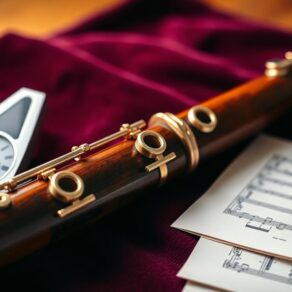
To master the flute, focus on breath control by practicing diaphragmatic breathing. Choose the right flute that suits your skill level, whether it’s a beginner model or advanced silver options. Enhance your tone quality through consistent practice of long notes and adjust your embouchure for clarity. Establish an effective practice routine with warm-ups and goal setting. Finally, manage performance anxiety with relaxation techniques and visualization. There’s so much more to discover to elevate your flute journey!
Key Takeaways
- Practice diaphragmatic breathing to improve airflow and control while playing the flute.
- Choose a flute that suits your level; beginners should opt for student models.
- Focus on refining your embouchure and breath support for a better tone.
- Establish a consistent practice routine with warm-ups and specific goals for progress.
- Use relaxation techniques and visualization to manage performance anxiety effectively.
Mastering Breath Control for Better Sound
When you focus on mastering breath control, you’ll unlock a world of richer sound and greater musical expression on the flute. Effective sound production starts with your breath, and incorporating breath exercises into your practice routine is essential.
Begin by exploring deep diaphragmatic breathing; this technique enhances airflow and promotes steadiness in your tone.
Try simple exercises, like inhaling for four counts, holding for four, and exhaling for eight. This not only builds your lung capacity but also helps you develop the ability to sustain notes longer.
As you progress, experiment with dynamic control—varying your volume and intensity will add depth to your playing.
How to Choose the Right Flute: Tips for Beginners and Advanced Players
Choosing the right flute can significantly impact your playing experience, whether you’re just starting out or looking to upgrade your instrument. For beginners, consider student models from reputable flute brands that offer durable beginner flutes at budget-friendly price ranges.
Look for options made from silver-plated brass, which provides a warm sound and is easy to maintain.
As you advance, think about material types and size considerations that suit your sound preferences. Professional flutes often feature solid silver or gold bodies, enhancing tonal quality.
Advanced options may also include open-hole designs and B-foot joints for greater versatility.
Don’t forget to try different flutes, as each will feel and sound unique. Connecting with fellow players can offer valuable insights, making your choice not just about the instrument, but about joining a community.
Simple Techniques to Enhance Your Tone Quality
To enhance your tone quality, focus on your embouchure and breath support, as these elements are crucial for producing a clear, resonant sound. Start by practicing tone exercises that emphasize long, sustained notes. This will help you develop control over your airflow and sound production.
Pay attention to your embouchure adjustments; a small change in lip positioning can make a significant difference in your tone. Experiment with different angles and firmness to find what works best for you. Remember, consistency is key!
Incorporate these exercises into your daily routine, and don’t be discouraged if progress feels slow. You’re part of a community of musicians striving for improvement, and every small step counts.
Connect with fellow flutists for feedback and support; sharing your experiences can make your journey more enjoyable. Keep honing your skills, and you’ll notice a richer, more vibrant tone that reflects your dedication and passion.
Effective Practice Routines for Flute Players
How can you make the most of your practice time as a flute player? Start by creating structured practice schedules that fit your lifestyle. Aim for consistency; even short, daily sessions can yield great results.
Begin each practice with warm-up exercises, focusing on tone and technique. These might include long tones, scales, or arpeggios, which help you build muscle memory and confidence.
Next, set specific goals for your sessions. Whether it’s mastering a challenging piece or improving your vibrato, having a clear objective keeps you focused. Break your practice into segments—spend time on technique, repertoire, and sight-reading.
Lastly, don’t forget to reflect on your progress. Celebrate small victories and adjust your routines as needed. Surround yourself with fellow flute players to share experiences and tips.
How to Manage Performance Anxiety as a Flute Player?
After honing your skills through effective practice routines, you might find yourself facing performance anxiety when it’s time to showcase your talent. It’s completely normal to feel nervous, but there are strategies to help you manage those jitters.
Start with relaxation exercises, like deep breathing, to calm your mind and body before you perform. Take a few moments to focus on your breath, letting go of tension with each exhale.
Incorporating visualization techniques can also be powerful. Picture yourself confidently playing your flute, connecting with your audience, and enjoying the music. This mental rehearsal can boost your self-assurance and help reduce anxiety.
Discovering Genres: Best Music Styles for Flute Players
What music styles intrigue you as a flute player? Exploring different genres can elevate your skills and expand your horizons. Start with the classical repertoire, where you can master timeless pieces and understand fundamental techniques. This foundation will serve you well in any genre.
Next, dive into jazz improvisation. It’s not just about playing notes; it’s about expressing yourself. Jazz allows you to experiment and develop your unique voice.
Don’t overlook contemporary fusion, where various styles blend to create exciting new sounds. It’s a fantastic way to innovate while using the skills you’ve honed.
Lastly, embrace world music. Each culture offers unique rhythms and melodies that can inspire your playing and deepen your appreciation for the flute.
Flute Maintenance Tips
Maintaining your flute in top condition is essential for optimal performance and longevity. Start with regular cleaning techniques to keep your instrument shining and functioning well.
After each play session, gently wipe the exterior with a soft cloth to remove moisture and fingerprints. For the inside, use a cleaning rod with a swab to prevent buildup.
Don’t forget about pad care! Pads can absorb moisture, leading to issues over time. To help them last, avoid excessive playing in humid conditions, and consider using a pad saver when storing your flute.
Finally, schedule periodic check-ups with a qualified technician. They’ll ensure your flute is properly adjusted and free from leaks.
Frequently Asked Questions
What Are the Best Brands of Flutes for Beginners?
When you’re choosing a flute as a beginner, consider Yamaha flutes for their reliability and ease of play.
Gemeinhardt flutes also offer great sound quality and comfort.
Pearl flutes are known for their durability, while Jupiter flutes provide excellent value.
Trevor James flutes are perfect for those seeking a warm tone, and Azumi flutes combine craftsmanship with affordability.
Each brand has unique strengths, so explore them to find the one that feels right for you!
How Can I Improve My Sight-Reading Skills?
To improve your sight-reading skills, practice sight reading exercises daily, focus on improving rhythm, and break down challenging pieces.
As you read, keep your eyes on the music, not your instrument, and let your fingers follow. Start with simple melodies, gradually increasing complexity.
Join a group or find a buddy to share progress and encourage each other. Embrace mistakes as learning opportunities, and soon you’ll find your confidence growing along with your skills.
What Should I Look for in a Flute Teacher?
When you’re looking for a flute teacher, focus on their teaching style and how they engage with students. A supportive, encouraging approach can make a big difference in your learning experience.
Don’t hesitate to check student feedback; it’ll give you insight into their effectiveness. Look for someone who tailors lessons to your needs and fosters a sense of belonging, ensuring you feel comfortable and motivated to develop your skills.
How Can I Play in Tune With Other Instruments?
To play in tune with other instruments, you should focus on intonation exercises and regular ensemble practice.
Did you know that nearly 70% of musicians struggle with tuning in group settings? By incorporating ear training and matching pitches during rehearsals, you’ll build a stronger sense of harmony.
What Are Common Mistakes to Avoid When Learning the Flute?
When learning the flute, avoid common mistakes like poor embouchure and incorrect finger positioning.
Make sure your lips form a tight yet relaxed shape to create a steady sound. Check your fingers; they should cover the holes completely for optimal tone.
Don’t rush your practice—focus on small sections and build gradually.
Conclusion
In conclusion, mastering the flute takes time and dedication, but don’t let initial struggles discourage you. Remember, every accomplished flutist started as a beginner, facing similar challenges. By focusing on breath control, choosing the right instrument, and establishing effective practice routines, you’ll enhance your skills and enjoyment. Embrace the journey, explore various music styles, and prioritize maintenance. With persistence and passion, you’ll not only improve but also find joy in every note you play. Keep going!