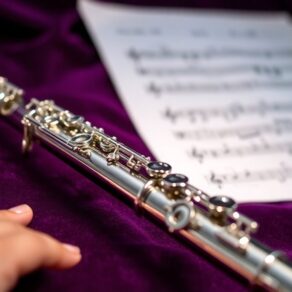
Professional flutists practice with a disciplined approach, focusing on specific goals that refine their technical skills and enhance musical expression. They prioritize warm-ups to develop breath control and tone quality, and they incorporate technology like apps and metronomes for structured practice. Targeted exercises work on muscle memory, while peer collaboration offers valuable feedback and new perspectives. This intentional method fosters continuous improvement and artistry. Discover more strategies to elevate your flute practice and artistry.
Key Takeaways
- Professional flutists set specific goals to focus their practice sessions on areas like tone quality, rhythm precision, and dynamic control.
- They incorporate structured warm-up routines to develop breath control, enhance tone production, and prepare mentally for practice.
- Many utilize technology, such as mobile apps and digital metronomes, to track progress and maintain tempo during practice.
- Targeted exercises are employed to build muscle memory, breaking complex passages into manageable segments for repetition.
- Collaboration with peers through group rehearsals fosters growth, diverse musical interpretations, and valuable feedback for technique improvement.
Setting Specific Goals for Flute Practice
When you set specific goals for your flute practice, you create a focused pathway for improvement. Goal setting is essential; it transforms vague intentions into actionable steps.
Start by identifying areas where you want to excel—be it tone quality, rhythm precision, or dynamic control. Break these down into achievable milestones, like mastering a particular scale or a challenging passage from a piece.
Implement practice strategies that align with these goals. Dedicate each session to a specific focus, ensuring you’re not just repeating but refining. Utilize tools like metronomes and recordings to track your progress and make adjustments as needed.
This disciplined approach fosters a sense of belonging within the flutist community, as you share your journey and accomplishments.
Why Warm-Ups Matter for Flutists
Although some might overlook warm-ups as a mere formality, they play a crucial role in a flutist’s practice routine. Proper warm-ups help you develop essential breath control, creating a strong foundation for your performance.
By engaging in targeted exercises, you can refine your lung capacity and airflow management, which are vital for achieving dynamic expression.
Moreover, warm-ups enhance your tone production, allowing you to explore the nuances of your instrument. As you focus on producing a clear and resonant sound, you’ll find that your overall musicianship improves.
A disciplined warm-up routine prepares not just your body, but also your mind, fostering a sense of belonging within the musical community.
Incorporating Technology for Flute Practice
As you explore the integration of technology into your flute practice, you’ll find numerous tools designed to enhance your skill development and efficiency.
Mobile apps for practice provide tailored exercises, interactive feedback, and recording features that help you monitor your progress. Embrace app practice to track your goals and stay motivated within a community of fellow musicians.
One of the most valuable tools is the digital metronome. This device not only ensures you maintain a steady tempo but also offers various rhythms and time signatures to challenge your precision.
Targeted Exercises for Muscle Memory
Incorporating technology into your practice can serve as a springboard for more focused work on muscle memory. Use apps that allow you to visualize muscle movements in real-time. This muscle visualization helps you understand the physical demands of playing and reinforces correct techniques.
Pair this with rhythmic exercises, emphasizing precision and consistency. Break down complex passages into manageable segments, repeating them at various tempos. By integrating these targeted exercises, you’ll create a strong foundation for muscle memory.
As you practice, pay attention to how your body feels; this awareness fosters deeper connections between mind and muscle. Consider recording your sessions to assess your progress and identify areas needing improvement.
How Peer Collaboration Fuels Flute Progress
When you collaborate with peers, you tap into a rich resource for growth and inspiration in your flute playing. Engaging in group rehearsals allows you to explore different interpretations and musical ideas, fostering a deeper understanding of the repertoire.
The diverse perspectives of your peers can challenge your approach, pushing you to refine your technique and expressiveness. Peer feedback is invaluable; it provides honest insights that you might overlook in solo practice. Constructive criticism helps you identify areas for improvement, whether it’s breath control, intonation, or phrasing.
Working alongside fellow flutists also cultivates a sense of belonging and camaraderie, essential for artistic growth. As you navigate through various pieces together, you’ll discover new techniques and ensemble skills that elevate your playing.
The synergy of collaboration creates an environment ripe for innovation, ensuring that you continue to progress and develop as a flutist.
Maintaining a Positive Mindset During Practice Sessions
While cultivating a positive mindset during practice sessions can significantly impact your progress, it requires intentionality and self-awareness.
Start by integrating mindfulness techniques into your routine. Focus on your breath and the sensations of playing, allowing distractions to fade away. This present-centered approach enhances your connection to the music and yourself.
In addition, utilize motivational affirmations to reinforce your commitment. Phrases like “I’m improving every day” or “I embrace challenges as opportunities” can shift your perspective, making obstacles feel surmountable.
Write these affirmations down and repeat them before you begin practicing.
Frequently Asked Questions
How Long Do Professional Flutists Typically Practice Each Day?
Professional flutists typically practice for two to six hours each day, depending on their individual goals and commitments.
Your daily practice routines should focus on technical exercises, repertoire, and artistry, blending precision with expressive playing.
To cultivate a disciplined approach, set specific goals for each session, balancing skill development with interpretive exploration.
What Type of Flute Do Professional Flutists Prefer?
Most professional flutists prefer handcrafted flutes made from silver or gold, each instrument a unique tapestry of sound and artistry.
These materials offer not just tonal richness but also a deep connection to the music you create.
When choosing your flute, consider how it feels in your hands and the warmth of its voice.
A disciplined approach to playing with the right instrument can elevate your artistry and foster a sense of belonging within the musical community.
How Do Flutists Overcome Performance Anxiety?
Flutists overcome performance anxiety by employing mindfulness techniques and breathing exercises. You can focus on the present moment, quiet your mind, and release tension, allowing your artistic expression to flow freely.
Practicing deep breathing helps regulate your heart rate, calming your nerves before stepping on stage. By integrating these disciplined approaches into your routine, you create a sense of belonging within yourself, transforming anxiety into confidence and enhancing your overall performance experience.
What Are Common Mistakes to Avoid in Flute Practice?
You can avoid common mistakes in flute practice by focusing on tuning techniques and breath control.
Don’t underestimate the importance of proper intonation; even a slight pitch change can sound like a cat in a blender!
Also, neglecting breath support can turn your beautiful melodies into wheezing whispers.
Maintain a disciplined approach by setting clear goals and ensuring your warm-ups are both technically precise and artistically expressive.
You’ll feel a sense of belonging among fellow musicians!
How Do Professional Flutists Choose Their Repertoire?
You choose your repertoire based on personal preferences, technical challenges, and artistic expression.
Start by considering pieces that resonate with you emotionally while also pushing your skills.
Balance well-known works with lesser-known gems to showcase your versatility.
A disciplined approach means you’ll refine your selection over time, ensuring it aligns with your artistic goals.
Ultimately, your repertoire reflects who you’re as a musician, fostering a deeper connection with your audience.
Conclusion
In the symphony of your flute practice, each note you play weaves a tapestry of growth and mastery. By setting clear goals, embracing warm-ups, and harnessing technology, you build a robust foundation. Let targeted exercises sculpt your muscle memory, while collaboration with peers ignites inspiration. Remember, a positive mindset is the golden thread that binds it all together. With discipline and artistry, you’re not just practicing; you’re crafting your own masterpiece, one breath at a time.