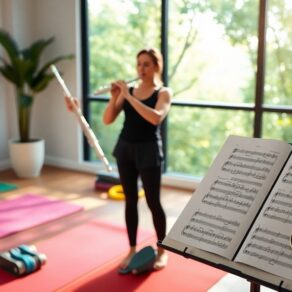
To practice the flute efficiently, start by setting clear, achievable goals to guide your sessions. Incorporate essential warm-up exercises like long tones and rhythmic drills to build a solid foundation. Focus on developing finger dexterity with targeted techniques and include scales and arpeggios for versatility. Regularly assess your progress to identify areas for improvement, helping you stay motivated. Keep exploring new strategies to enhance your practice and discover even more effective techniques along the way.
Key Takeaways
- Set clear, achievable goals and break them into smaller tasks to maintain focus and motivation during practice sessions.
- Incorporate essential warm-up exercises, such as long tones and breath control, to build a solid foundation for playing.
- Use a metronome to develop steady tempo and timing while practicing rhythmic exercises and challenging pieces.
- Reflect on your practice after each session, noting areas of success and improvement to guide future sessions.
- Celebrate achievements, both big and small, to boost motivation and encourage continued progress in your flute playing.
Why Efficient Flute Practice Matters
Efficient flute practice matters because it maximizes your progress and keeps you motivated. By adopting a positive practice mindset, you’ll not only improve your skills but also enjoy the journey. Focus on incorporating efficient techniques that streamline your learning process.
Start by breaking down challenging pieces into manageable sections. This way, you can concentrate on specific areas without feeling overwhelmed. Use a metronome to help you maintain a steady tempo, and don’t forget to incorporate warm-ups that target different aspects of your playing.
Additionally, it’s essential to stay consistent with your practice schedule. Even short, focused sessions can be incredibly effective. Embrace the challenge, and remember that progress is often gradual.
Surround yourself with fellow flutists and share your experiences; this sense of community will keep you inspired. With the right mindset and efficient techniques, you’ll find yourself enjoying your flute journey more than ever.
Set Clear Goals for Your Practice Sessions
Setting clear goals for your practice sessions can significantly enhance your focus and motivation. Goal setting is essential; it gives you a roadmap for what you want to achieve. Start by identifying specific skills you’d like to improve, whether it’s mastering a piece, improving your tone, or developing rhythm.
Break these goals into smaller, manageable tasks. Instead of saying, “I’ll practice for an hour,” aim for, “I’ll spend 15 minutes on scales, 20 minutes on a piece, and the rest on sight-reading.” This structured approach helps you stay on track and makes progress feel achievable.
Incorporate various practice strategies, such as using a metronome or recording yourself, to keep sessions engaging and effective.
Essential Warm-Up Exercises for Flute Players
Before diving into your practice session, it’s crucial to incorporate essential warm-up exercises that prepare your body and mind for playing the flute. Start with long tones, focusing on producing a steady, resonant sound. Choose a comfortable pitch and hold each note for 8-10 counts, gradually increasing your breath support. This exercise not only improves your tone but also enhances your control.
Next, engage in rhythmic exercises. Use a metronome to establish a steady tempo, playing simple patterns that challenge your timing. You can vary the rhythms with dotted notes, triplets, or syncopation, keeping it interesting.
Combining these warm-ups fosters a solid foundation for your practice, helping you to perform with confidence and precision. Remember, consistency is key.
Build Finger Dexterity With These Techniques
To build finger dexterity effectively, it’s essential to incorporate targeted exercises into your daily practice routine. By focusing on specific finger exercises and technique drills, you’ll enhance your agility and coordination.
Here are four effective techniques to consider:
- Five-Finger Exercises: Play scales or arpeggios using only your fingers, ensuring each note is clear and precise.
- Octave Leaps: Practice jumping from one octave to another, which helps develop finger strength and speed.
- Tremolo Techniques: Work on rapid finger movements by playing repeated notes at varying speeds, allowing for flexibility.
- Chromatic Runs: Use chromatic scales to challenge your fingers with quick transitions between notes.
Stay committed to these techniques, and you’ll see improvement in your finger dexterity.
Incorporate Scales and Arpeggios Into Your Routine
Building finger dexterity lays a solid foundation for your flute practice, and incorporating scales and arpeggios into your routine further enhances your musicality.
Start with scales practice; they develop your finger coordination and intonation. Begin with major scales, moving to minor ones as you progress. Play them slowly, focusing on accuracy before increasing your speed.
Next, integrate arpeggios exercises. These will help you understand chord structures and improve your ability to navigate the flute. Try practicing arpeggios of different chords, such as major, minor, and diminished.
Make it engaging! Set goals for each practice session, like mastering a new scale or arpeggio.
Remember, consistency is key; even just 15 minutes daily can lead to significant improvement. Embrace this journey, and you’ll find a sense of belonging in the music community as you develop your skills.
Happy practicing!
Improve Your Flute Tone and Breath Control
While you may have mastered scales and arpeggios, improving your flute tone and breath control is essential for elevating your playing.
By focusing on tone exercises and breath techniques, you can achieve a more resonant sound and smoother performances.
Here are four effective strategies to get you started:
- Long Tones: Play sustained notes to develop a steady, rich tone. Focus on consistent breath support.
- Breath Control Exercises: Use a metronome to time your inhalation and exhalation, gradually increasing the duration.
- Harmonics: Practice overtones to enhance your tone quality and pitch accuracy.
- Dynamics Practice: Experiment with playing softly and loudly to improve control and expressiveness.
Incorporating these techniques into your daily routine won’t only enhance your sound but also foster a deeper connection with your instrument.
Keep at it—you’re on the path to becoming a more skilled flutist!
Use Apps and Resources to Boost Your Practice
Utilizing apps and resources can significantly enhance your flute practice, making it more efficient and enjoyable. Start by exploring various practice apps designed specifically for flutists. These apps often include features like metronomes, tuners, and even play-along tracks that help you develop your timing and intonation.
Additionally, resource websites offer a wealth of tutorials, sheet music, and tips from seasoned professionals. Engaging with these platforms can provide you a sense of community, connecting you with fellow flutists who share similar goals and challenges.
Don’t hesitate to join online forums or social media groups where you can ask questions and receive feedback. By integrating technology into your practice routine, you’re not only making learning more interactive but also fostering a supportive network.
Embrace these tools, and watch your skills flourish as you deepen your understanding and enjoyment of the flute.
Stay Motivated and Overcome Practice Plateaus
Staying motivated during your flute practice is key to overcoming those frustrating plateaus that can sometimes arise. You’re not alone in this journey, and using effective motivation strategies can help keep your passion alive.
Here are four tips to help you stay engaged:
- Set Achievable Goals: Break down your practice into smaller, manageable goals. Celebrate each accomplishment!
- Change Your Routine: Switch up your practice exercises or try new pieces to keep things fresh and exciting.
- Join a Community: Connect with fellow flutists, whether online or in person, to share experiences and encouragement.
- Reward Yourself: Treat yourself after a practice session or when you reach a goal. Positive reinforcement can be a great motivator.
How Can You Track Your Progress for Continuous Improvement?
How can you effectively track your progress on the flute to ensure continuous improvement? One great method is maintaining a progress journal. By jotting down your daily practice sessions, you can easily see what techniques you’re mastering and where you need more focus. This helps create a tangible record of your growth.
Incorporating self-assessment into your routine is also essential. After practicing, take a moment to reflect on what went well and what didn’t. Ask yourself specific questions about your performance, like how you felt about your tone or timing.
Regularly revisiting your journal entries helps you spot trends in your playing, allowing you to celebrate achievements and set new goals.
Frequently Asked Questions
What Is the Best Time of Day to Practice the Flute?
The best time to practice the flute really depends on your personal preference.
Some people find that practicing in the morning energizes them and sets a positive tone for the day, while others might prefer the evening when they can unwind and focus.
Experiment with both morning and evening sessions to see when you feel most motivated and alert.
Ultimately, consistency is key, so choose a time that fits your routine and stick with it!
How Long Should Each Practice Session Last?
You might think practice duration is a mere suggestion, but let’s be real: it’s all about quality, not just quantity. Aim for 30 to 60 minutes per session, depending on your goals.
Consistency matters too, so try to practice three to five times a week. Break it up if you need to; even short bursts can be effective.
Can I Practice Without My Flute?
Yes, you can practice without your flute! Silent practice is a valuable tool for developing your skills.
Focus on mental exercises like visualizing fingerings, imagining yourself playing pieces, or even listening to recordings while mentally playing along. This method reinforces muscle memory and enhances your understanding of the music.
What Equipment Do I Need for Home Practice?
For effective home practice, you’ll need a few key pieces of equipment. First, grab a metronome to help keep your timing steady. It’s a game-changer for developing rhythm!
Next, have your sheet music ready to focus on specific pieces. You might also want a tuner to ensure your flute’s in tune.
Finally, consider a practice journal to track your progress and set goals. With these tools, you’ll feel more confident and connected to your music!
How Do I Avoid Physical Strain While Practicing?
To avoid physical strain while practicing, focus on proper posture techniques. Sit up straight, keep your shoulders relaxed, and align your head with your spine.
Start each session with warm-up exercises to loosen your muscles and improve flexibility. Incorporate stretches for your neck, shoulders, and wrists to prevent tension.
Conclusion
In the grand symphony of life, who needs efficient flute practice when you can just blow into the instrument and hope for the best? But let’s be real: if you want to sound less like a cat in distress and more like a master flutist, you’ve got to put in the work. So grab that metronome, stick to your goals, and remember—every great musician started with a single note. Keep practicing, and you’ll hit all the right ones!