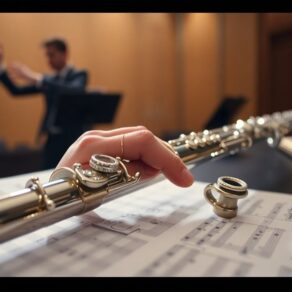
To prepare for your flute performance, select a diverse repertoire that resonates with you and showcases your skills. Practice effectively by focusing on breath control and challenging passages, while recording your sessions to track progress. Ensure your flute is well-tuned and conduct sound checks at the venue. Create a familiar stage presence to ease anxiety, and arrive early to set up. By following these tips, you’ll be ready to impress your audience and elevate your performance.
Key Takeaways
- Select at least three contrasting pieces that resonate personally and showcase your unique voice and skills.
- Create a structured practice schedule focusing on breath control, difficult passages, and specific performance goals.
- Tune your flute using a reliable tuner and ensure harmony with ensemble members before the performance.
- Manage performance anxiety through visualization, deep breathing exercises, and familiarization with the performance venue.
- Gather feedback from peers and instructors, and review recordings of your performances for continuous improvement.
Selecting Your Repertoire: Choosing the Right Pieces
When it comes to selecting your repertoire, aim for a mix of at least three contrasting pieces that showcase your strengths and stylistic versatility.
Start by considering genre diversity; choose pieces from different styles, like classical, jazz, or contemporary. This variety not only highlights your adaptability but also keeps your performance engaging for the audience.
Next, think about your personal connection to each piece. You’ll perform best when you feel passionate about the music you’re playing. Each selection should challenge you while allowing your unique voice to shine through.
Finally, don’t hesitate to seek feedback from trusted peers or instructors. They can offer insights that enhance your repertoire selection process.
Practicing Effectively: Techniques to Build Confidence and Skill
After selecting your repertoire, the next step is to adopt effective practice techniques that will build your confidence and enhance your skills.
Start by focusing on breath control; it’s fundamental to your sound quality and expression. Engage in specific breath exercises to strengthen your diaphragm and improve your lung capacity.
Incorporate rhythmic exercises into your routine. Use a metronome to maintain steady tempo and challenge yourself with various rhythms. This not only improves your timing but also makes your performances more dynamic.
Practice in small, manageable segments, concentrating on difficult passages before gradually increasing the tempo.
Don’t hesitate to record yourself; this helps you identify areas for improvement and track your progress.
How to Tune Your Flute for Optimal Performance
To achieve optimal performance, tuning your flute is essential before stepping on stage. Proper flute maintenance ensures your instrument is in top shape, and utilizing effective tuning methods will help you sound your best. Here’s how to get started:
- Use a tuner: Invest in a reliable tuner or download a tuning app. Play a sustained note and adjust the headjoint until the pitch aligns with the tuner’s reading.
- Check octave tuning: After you’ve tuned your flute, play notes in both low and high octaves. Ensure they sound in harmony; if not, you may need to adjust the headjoint slightly.
- Fine-tune with your ensemble: If you’re performing with others, always tune together. This ensures everyone’s instruments blend beautifully, creating a cohesive sound.
How to Handle Performance Anxiety?
Even with perfect tuning, the nerves can still kick in before a performance. To combat performance anxiety, start by using visualization techniques. Picture yourself on stage, confidently playing your flute, and receiving applause. This mental rehearsal can create a sense of familiarity, easing your nerves.
Incorporate breathing exercises into your routine. Take deep breaths, inhaling through your nose and exhaling slowly through your mouth. This simple practice calms your mind and centers your focus.
Consider counting your breaths to maintain rhythm and control.
Creating a Practice Schedule: Structuring Your Time Wisely
When you structure a practice schedule effectively, you set yourself up for success in your flute performance. Good time management and goal setting are essential for maximizing your practice sessions.
Here’s how to create an impactful schedule:
- Set Clear Goals: Identify specific skills or pieces you want to improve. Break these down into manageable tasks to keep your focus sharp.
- Allocate Time Wisely: Dedicate consistent time slots each week for practice. This helps you build a routine and ensures you’re making steady progress.
- Include Variety: Mix up your practice with scales, etudes, and repertoire. This not only keeps things fresh but also enhances different aspects of your playing.
Effective Practice Techniques for Flutists
After establishing a solid practice schedule, you’re ready to enhance your skills with effective techniques that will elevate your flute playing.
Focus on breath control by incorporating long tones into your routine; this builds your lung capacity and improves your tone quality. Next, work on finger dexterity by practicing scales and arpeggios, gradually increasing speed. This’ll help you navigate challenging passages with ease.
For rhythmic accuracy, use a metronome during your practice. Start slowly, then gradually increase the tempo, ensuring you maintain precision.
Lastly, incorporate dynamic expression by experimenting with different articulations and volume levels. Play a piece at various dynamics to understand how they impact the overall sound.
Engaging Your Audience: Preparing Your Stage Presence
How can you captivate your audience during a flute performance? Engaging your audience goes beyond playing notes; it’s about creating an emotional connection. Here are three key elements to enhance your stage presence:
- Body Language: Use open gestures and facial expressions to convey your passion. Move confidently to draw your audience in.
- Costume Choices: Select outfits that reflect your personality and complement the music. Thoughtful attire can elevate your performance energy and set the mood.
- Audience Interaction: Make eye contact and smile. Invite your audience to share in your experience, making them feel included in the performance.
What to Bring for Your Performance
To ensure a smooth flute performance, you need to pack essential items that support both your playing and your peace of mind. Start your packing checklist with your flute and cleaning supplies—nothing’s worse than discovering a dirty instrument right before you play.
Include a music stand if you’ll need one, along with your sheet music, neatly organized. Don’t forget a tuner and metronome, as these performance essentials will help you stay in tune and on tempo.
Prepare for any last-minute issues by bringing extra reeds, a small screwdriver for quick fixes, and even a water bottle to stay hydrated.
Personal items like a favorite snack or calming essential oil can also help ease pre-performance jitters. Remember, packing thoughtfully not only enhances your performance but also fosters a sense of belonging in the music community.
You’re ready to shine—so let’s get everything together!
Arriving Early: Setting Up for Success at the Venue
Arriving early at the venue not only gives you ample time to set up but also allows you to acclimate to the space. Familiarizing yourself with the venue layout can significantly enhance your performance. Here’s how to set yourself up for success:
- Explore the Space: Walk around to understand the acoustics and atmosphere. This familiarity will help ease any pre-performance jitters.
- Set Up Your Area: Arrange your stand, flute, and sheet music to your liking. A tidy setup can make you feel more organized and in control.
- Conduct a Sound Check: Before your performance, check how your flute sounds in the venue. Adjust your playing style accordingly to ensure clarity and resonance.
Reflecting on Your Performance: Lessons Learned for Next Time
After your performance concludes, taking a moment to reflect can be incredibly beneficial for your growth as a flutist. Use self-evaluation techniques to assess your playing. Ask yourself what went well and identify areas for improvement. Were there moments where you felt confident? Celebrate those successes.
Then, consider challenges you faced—did nerves impact your performance? Acknowledging these factors helps you grow.
Don’t shy away from seeking constructive feedback from peers or mentors. Their insights can offer fresh perspectives and highlight aspects you might’ve missed.
Create a plan for your next practice session based on your reflections and the feedback you receive. This proactive approach not only enhances your skills but also fosters a sense of belonging within your musical community.
Frequently Asked Questions
What Should I Wear for My Flute Performance?
For your flute performance, choose performance attire that makes you feel confident and comfortable.
Opt for solid colors like black or navy, which convey professionalism. Avoid busy patterns that might distract from your playing.
If you want to add a pop of color, consider accessories that complement your outfit.
Remember, you want to feel good on stage, so wear something that reflects your personality while maintaining a polished appearance.
You’ve got this!
How Can I Warm up Before Performing?
Before performing, start with long tones; studies show they enhance breath control by up to 30%.
Focus on sustaining each note, feeling the vibrations resonate through your body.
Then, move to scale exercises to warm your fingers and reinforce muscle memory.
These techniques not only prepare you physically but also mentally, creating a sense of belonging among fellow musicians.
Trust yourself, embrace the moment, and you’ll shine on stage!
Should I Memorize My Pieces or Use Sheet Music?
You should definitely consider memorizing your pieces, as it can enhance your performance and boost your confidence.
Use memorization techniques like chunking and visualization to make it easier. However, don’t underestimate the benefits of sheet music; it provides security and can help you stay focused during complex sections.
Ultimately, find a balance that works for you. Embrace both methods, and you’ll feel more connected to your music and your audience.
How Do I Manage My Breathing While Performing?
To manage your breathing while performing, practice deep breathing techniques. Inhale slowly through your nose, filling your lungs, and exhale gently through your mouth. This rhythm helps calm performance anxiety, like a soothing wave washing over you.
Remember to take breaths between phrases, keeping your airflow steady. Visualize the music flowing effortlessly, creating a sense of belonging in each note.
With time, your confidence will grow, and your breath will guide your performance beautifully.
What to Do if I Make a Mistake on Stage?
If you make a mistake on stage, don’t panic!
Maintain your stage presence by staying calm and composed. Engage the audience with a smile or a light-hearted gesture, showing them you’re still in control.
Acknowledge the mistake subtly, then continue playing without dwelling on it. Remember, your audience is there to enjoy the performance, not to scrutinize every note.
Embrace the moment and keep the energy flowing; they’ll appreciate your resilience!
Conclusion
As you step onto the stage, heart racing and breath quickening, remember all the preparation you’ve put in. Trust your practice, let the music flow, and connect with your audience. Feel the energy in the room—it’s electric. Each note you play is a chance to share a piece of yourself. Embrace the moment, knowing that every performance is a step on your journey. What will your audience feel tonight? The answer lies in your hands.