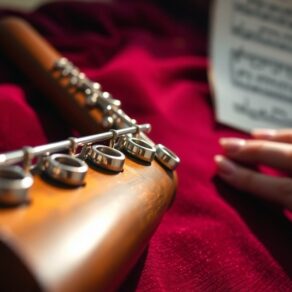
To start your flute journey, focus on five essential exercises. First, master your posture and breath control for a strong foundation. Next, practice long tones to develop your sound. Then, work on finger exercises to improve scale mastery. Incorporate rhythmic patterns for timing and groove. Finally, play easy melodies like “Hot Cross Buns” to boost your confidence and refine your skills. Keep practicing and you’ll uncover more techniques to enhance your flute playing!
Key Takeaways
- Master posture and breath control to ensure a strong, steady sound while playing the flute.
- Practice long tones to improve tone production and sound quality through consistent airflow.
- Start with simple finger exercises like the C major scale to build dexterity and coordination.
- Incorporate clapping rhythmic patterns to enhance timing and translate them into flute playing.
- Play easy melodies like “Hot Cross Buns” to boost confidence and improve finger placement and timing.
Posture and Breath Control Basics
When you start playing the flute, mastering your posture and breath control is crucial—think of it as the foundation of your musical journey. Proper alignment sets the stage for everything that follows.
Stand or sit up straight, ensuring your shoulders are relaxed but not slouched. Your head should be level, allowing your neck to be long and free. This posture helps you project your sound and reduces tension.
Next, focus on breathing techniques. Inhale deeply through your diaphragm, not just your chest. This breath gives you the support needed for a strong sound.
As you exhale, let the air flow steadily and control it with your abdominal muscles. Practicing these basics won’t only enhance your playing but also build your confidence.
Develop Your Sound: Long Tones for Flute Beginners
Having established a solid posture and breath control, you’re ready to focus on developing your sound through long tones. Long tones are essential for improving your tone production and enhancing your sound quality. Start by selecting a comfortable note, ideally in the middle range of your flute.
Take a deep breath, then blow steadily into the instrument. Aim for a clear, consistent sound, allowing the note to resonate fully. Hold the note for as long as you can, gradually increasing the duration over time. Pay attention to the evenness of your tone; this will help you build a strong foundation.
As you practice, listen closely to your sound. Is it rich and full? If not, adjust your embouchure or airflow to achieve a better quality.
Finger Exercises for Improved Scale Mastery
Finger exercises are vital for mastering scales on the flute, as they help build dexterity and coordination. By focusing on your finger placement, you’ll develop the muscle memory necessary for smooth transitions between notes.
Start with simple scale sequences, like the C major scale, playing slowly to ensure accuracy. As you progress, incorporate different finger combinations to challenge yourself.
Try ascending and descending scales, gradually increasing your speed while maintaining control. Remember, it’s not just about speed; precision is key.
Don’t hesitate to use a metronome to keep a steady tempo, creating a sense of accomplishment with each practice session.
By dedicating time to these finger exercises, you’ll notice improvements in your overall flute playing, making scales feel more natural. Embrace this journey, and you’ll find yourself becoming a more confident musician within your community.
Keep practicing—you’re not alone on this path!
Get in the Groove: Fun Rhythmic Patterns to Try
Rhythmic patterns can transform your flute practice into an engaging and dynamic experience. To get started, try incorporating some fun clapping patterns into your routine. Clap out simple rhythms, then translate those to your flute. This practice helps solidify your timing and strengthens your sense of rhythm.
Next, explore syncopated rhythms. These off-beat accents can add excitement to your playing. Start with a basic pattern, then challenge yourself by varying the length and emphasis of notes. For example, try playing two eighth notes followed by a quarter note, then reverse the pattern.
Don’t forget to mix things up! Combine clapping and flute-playing, creating a rhythmic dialogue.
You’ll find that practicing these patterns not only improves your timing but also makes your practice sessions more enjoyable. Embrace the groove, and let the music flow!
Explore Easy Melodies for Flute Beginners
While mastering the flute may seem daunting at first, exploring easy melodies can be a rewarding way to build your confidence and skills. By playing simple tunes, you’ll find joy in your progress and connect with the music community.
Here are three popular songs you can start with:
- “Hot Cross Buns” – A classic beginner piece that’s perfect for practicing breath control and finger placement.
- “Mary Had a Little Lamb” – This familiar melody allows you to focus on timing and smooth transitions between notes.
- “Twinkle, Twinkle, Little Star” – This beloved song not only enhances your technique but also helps you develop your musical ear.
As you practice these melodies, remember that every note you play brings you closer to mastery.
Embrace the journey, share your progress with others, and enjoy the sense of belonging that music creates!
Frequently Asked Questions
How Often Should I Practice as a Beginner Flutist?
As a beginner flutist, aim for at least 20-30 minutes of practice, four to five times a week.
This practice frequency helps build solid foundations and keeps you motivated. Set clear practice goals, like mastering a specific note or rhythm, to track your progress.
Consistency is key, so find a routine that fits your lifestyle. Remember, every little improvement counts, and soon you’ll feel more confident and connected with your instrument!
What Type of Flute Is Best for Beginners?
The best flute for you as a beginner isn’t just an instrument; it’s your ticket to a musical universe!
Student flutes from reputable beginner brands like Yamaha or Jupiter offer excellent quality without breaking the bank. These flutes are designed for easy playability, making your learning journey smoother.
Investing in a good student flute will boost your confidence and help you connect with fellow musicians as you grow together in your musical adventure!
How Can I Clean and Maintain My Flute?
To clean and maintain your flute, start with regular flute cleaning after each use.
Use a cleaning rod with a soft cloth to wipe the inside and outside. Avoid moisture buildup to prevent damage.
Check pads for wear and replace them if necessary.
Store your flute in a case to protect it.
These maintenance tips will keep your instrument in great shape, ensuring you can enjoy playing for years to come.
What Common Mistakes Should Beginners Avoid?
Around 70% of beginners struggle with breath control and finger placement early on.
To avoid common mistakes, focus on your breath; steady airflow is crucial for a clear tone.
Also, pay attention to your finger placement—ensure your fingers cover the holes completely to produce accurate notes.
Don’t rush the learning process; embrace the journey, and remember, everyone makes mistakes.
You’re not alone in this, and with practice, you’ll improve steadily!
How Do I Choose a Flute Teacher?
To choose a flute teacher, start by considering their qualifications. Look for someone with formal training and experience teaching beginners.
Next, think about lesson styles—do you prefer a structured approach or a more relaxed vibe? It’s important to feel comfortable and supported, so don’t hesitate to meet potential teachers first.
Trust your instincts; finding the right fit can make your learning journey enjoyable and fulfilling. You deserve a teacher who inspires you!
Conclusion
Incorporating these five exercises into your practice routine can significantly boost your flute skills. Did you know that consistent practice can improve your musicality by up to 70%? By focusing on posture, breath control, sound development, finger dexterity, rhythmic patterns, and simple melodies, you’ll build a strong foundation as a flutist. Remember, every small step counts, and with dedication, you’ll see remarkable progress. Keep practicing, and enjoy the journey of making music!