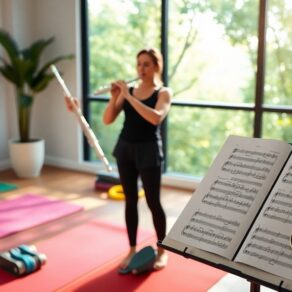
A perfect 20-minute flute practice routine starts with 5 minutes of warm-up exercises like long tones and scales to build breath control and finger agility. Follow this with 10 minutes of focused technical drills that enhance your articulation and finger coordination. Spend the remaining 5 minutes incorporating scales and arpeggios for fluency. By tracking your progress and setting achievable goals, you’ll maximize your time and skills. There’s plenty more to explore to elevate your practice experience.
Key Takeaways
- Begin with 5 minutes of warm-up exercises, including long tones and scales for breath control and finger agility.
- Dedicate 5 minutes to focused technical drills, practicing articulation and finger patterns at varying tempos.
- Spend 5 minutes on major and minor scales and arpeggios to enhance fluency and intonation.
- Track your progress through journaling or recording, noting challenges and improvements for future practice.
- Conclude with 5 minutes of repertoire practice, applying skills learned during the session to musical pieces.
Why a 20-Minute Practice Routine Works for Flute Players
A 20-minute practice routine is often the sweet spot for flute players of all levels. It’s short enough to fit into your busy schedule, yet long enough to achieve effective practice. By breaking down your time management, you can focus on specific skills without feeling overwhelmed.
This routine allows you to maintain concentration and energy, which is crucial for maximizing your progress. When you commit to just 20 minutes, you’ll find it easier to stay consistent, building a habit that nurtures your growth as a musician.
You’re part of a community that values dedication and improvement, and this manageable timeframe helps you feel connected to that journey.
As you practice daily, you’ll notice your skills sharpening, and your confidence growing. Embrace this routine, and you’ll be well on your way to mastering the flute while enjoying every moment of your musical adventure.
Essential Warm-Up Exercises for Your 20-Minute Practice Routine
Starting your practice session with focused warm-up exercises sets the stage for productive playing.
Begin with long tones to strengthen your breath control. Pick a comfortable note and hold it steady, gradually increasing volume and then decreasing. This exercise not only enhances your breath support but also helps you develop a rich sound.
Next, work on finger agility by practicing scales or simple arpeggios. Start slowly, ensuring each note is clear and precise. As you gain confidence, gradually increase your speed. This will help you feel more comfortable navigating the keys.
Incorporate lip slurs into your routine to improve your flexibility. Transitioning between notes without using your tongue can enhance your overall control and fluidity.
Focused Technical Drills to Boost Your Skills
While mastering the flute involves a variety of skills, incorporating focused technical drills into your practice routine can significantly enhance your proficiency.
These drills not only refine your breath control but also improve your finger coordination, making you a more versatile flutist.
Here are three effective drills to implement:
- Long Tones: Focus on sustaining notes to strengthen your breath control. Aim for evenness and clarity over a range of dynamics.
- Finger Patterns: Practice specific finger combinations at different tempos. This will enhance your finger coordination and speed.
- Articulation Exercises: Work on different articulation techniques, like staccato and legato, to develop clarity and precision in your playing.
Incorporating Scales and Arpeggios for Fluency
Incorporating scales and arpeggios into your practice routine is essential for developing fluency on the flute, as these fundamental exercises lay the groundwork for your overall musicianship. The scales benefits include improved finger dexterity, enhanced intonation, and a better understanding of musical patterns. Start with major and minor scales, gradually increasing the tempo as you gain confidence.
For your arpeggios practice, focus on major, minor, and diminished chords. This will strengthen your ability to navigate through different keys and harmonies, making your playing more versatile.
Aim to spend at least five minutes on both scales and arpeggios during your 20-minute session. Remember, consistency is key!
As you continue this practice, you’ll notice a significant improvement in your fluency, allowing you to express your musical ideas more freely. Embrace this process, and you’ll feel a sense of belonging in the world of music.
Techniques to Improve Your Musical Expression on the Flute
Mastering musical expression on the flute is vital for conveying your artistic vision and connecting with your audience.
To enhance your musical dynamics and emotional phrasing, consider these techniques:
- Vary Your Dynamics: Practice playing passages at different volumes. This helps you express contrasting emotions, whether it’s the softness of a lullaby or the intensity of a dramatic piece.
- Use Breath Control: Your breath is your voice on the flute. Focus on how your breath can shape phrases, allowing you to create swells and diminuendos that add depth to your performance.
- Experiment with Articulation: Try different articulations like staccato and legato. This variety can evoke different feelings and keep your audience engaged.
Master Sight-Reading With These Quick Tips
Improving your sight-reading skills can significantly enhance your overall musicianship, allowing you to tackle new pieces with confidence and ease. Start by incorporating daily sight reading exercises into your practice routine. Choose a variety of genres and difficulties to expand your musical vocabulary.
Next, focus on rhythm practice. Clap or tap out rhythms before playing to internalize them. This will make it easier to read and perform the notes accurately.
Additionally, set a timer for a few minutes and challenge yourself to read as much as you can without stopping. This builds your speed and accuracy.
Track Your Progress in 20 Minutes
After honing your sight-reading skills, it’s important to keep track of your progress to stay motivated and measure improvement.
Progress tracking isn’t just about numbers; it’s about recognizing your growth and setting new goals.
Here’s how to effectively track your progress in just 20 minutes:
- Journaling: Write down what you practiced today, noting any challenges and breakthroughs. This helps you see your journey over time.
- Recording: Use your phone or a digital recorder to capture your playing. Listening back can reveal improvements that you mightn’t notice in the moment.
- Goal Setting: Set specific, achievable goals for each practice session. For instance, aim to master a particular exercise or piece by next week.
Final Thoughts: Maximizing Your 20-Minute Practice Time
While you may only have 20 minutes to practice, making the most of that time can lead to significant improvements in your flute playing. Effective time management is key. Start by setting clear goals for each session, focusing on specific skills or pieces.
Break your practice into segments: warm-up, technique, and repertoire. This structure ensures you cover all essential areas without feeling rushed.
Practice consistency is crucial. Even short, focused sessions can yield great results if you stick with them regularly. Consider tracking your progress in a practice journal—this not only keeps you accountable but also motivates you as you see improvement over time.
Don’t forget to incorporate breaks, even in a 20-minute session; a few seconds to breathe can refresh your mind.
Embrace this routine, and you’ll find that your commitment to maximizing those 20 minutes will lead to a deeper connection with your instrument and a sense of belonging in the music community.
Frequently Asked Questions
Can Beginners Follow the Same 20-Minute Routine Effectively?
Yes, beginners can definitely follow the same 20-minute routine effectively with some beginner adaptations.
Start by breaking down the exercises into manageable parts and focus on consistency in your practice.
Even if you can only complete a portion of the routine, it’s important to stay regular.
Celebrate small achievements and remember, everyone progresses at their own pace.
With dedication, you’ll build your skills and find joy in your journey as a flutist!
What Equipment Do I Need for My Practice?
To create a harmonious practice space, you’ll need a few essential flute accessories.
Start with a quality flute, of course, but don’t forget a stand to hold your music, a metronome for rhythm, and a cleaning kit to keep your instrument in top shape.
Think of your practice area as a cozy nest where you can explore and grow.
With these tools, you’ll feel inspired and ready to make beautiful music together!
How Can I Stay Motivated During Short Practice Sessions?
To stay motivated during short practice sessions, set specific, achievable goals for each session.
Break your goals into smaller tasks, so you can celebrate each accomplishment. Use positive reinforcement, like rewarding yourself with a treat or a break after hitting your target.
Surround yourself with a supportive community, whether online or in-person, to share your progress and experiences.
Is It Okay to Skip Days in My Practice Routine?
Yes, it’s okay to skip days occasionally, but be mindful of practice consistency. Skipping too often can lead to forgetting techniques or losing progress.
Instead, try to make up for missed days with shorter, focused sessions. Remember, everyone has off days, and it’s about finding balance.
Stay positive and keep your goals in mind, and you’ll maintain a sense of growth and belonging in your musical journey.
How Can I Incorporate Breathing Exercises Into My Routine?
Think of your breath like a river; it flows smoothly when you control it.
To incorporate breathing exercises, start with simple breathing techniques that focus on diaphragm control. Spend a few minutes inhaling deeply, feeling your diaphragm expand, then exhaling slowly.
You can even try this while playing long tones on your flute. This practice not only enhances your breath support but also connects you more deeply with the music you love.
Conclusion
In just 20 minutes, you can make significant strides in your flute playing. By focusing on warm-ups, technical drills, and musical expression, you’re setting yourself up for success. Remember, practice makes perfect, and every minute counts. Keep track of your progress, and don’t hesitate to tweak your routine as needed. With dedication, you’ll see that little by little, you’ll hit all the right notes and take your skills to the next level. Happy practicing!